
Across the District
Spray Foam Insulation in Washington, DC
Rowhouses and detached homes built for an older idea of comfort.
- Free on-site estimates
- Written quote listing material, thickness and R-value for every area
- Moisture and ventilation checked before anything is sealed up
Sealing Up a City of Rowhouses
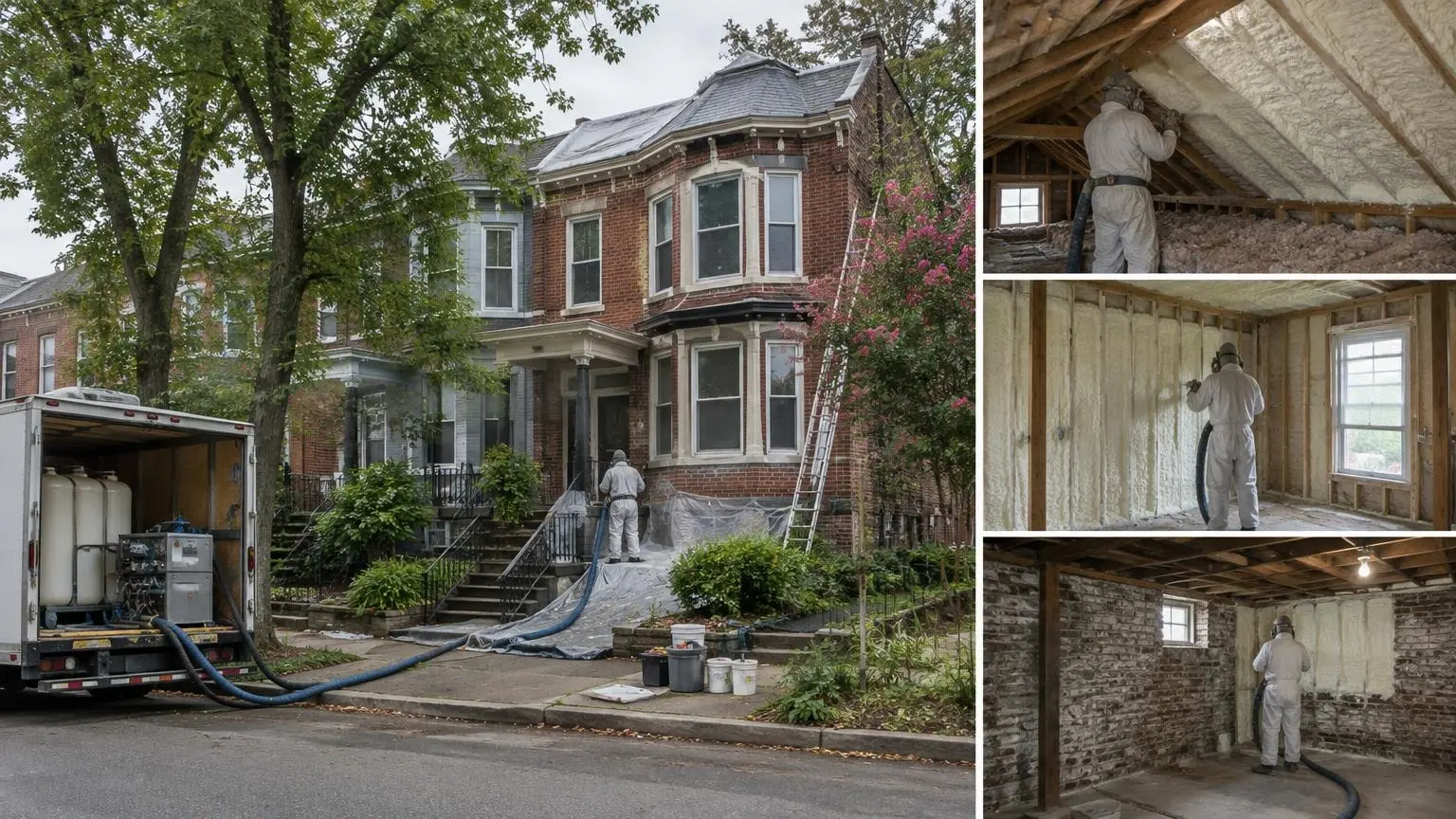
Spray foam insulation in Washington, DC works mostly on older houses. Rowhouses are prominent in the parts of the city built after the Civil War and typically follow Federal and late Victorian designs. Most went up long before air sealing was part of building a house, and many still have little insulation in the roof and none in the brick walls.
The climate in numbers
DC's July daily average is 79.8F with relative humidity around 66 percent, heat indices regularly approach 100F, and the city averages about 37 days a year at or above 90F. It also averages about 64 nights at or below freezing, with a record low of -15F set in 1899. A house here has to stay cool and dry in summer and hold heat in winter.
What the code says
DC's residential energy code is based on the 2017 IECC and written for Climate Zone 4A. Its prescriptive table lists R-49 for ceilings, R-15 continuous or cavity-plus-continuous combinations for basement walls, and new homes must test at 3 ACH50. Older houses are not required to meet that on their own, but it is a useful target when you renovate.
Where we usually start
In a rowhouse: the roof cavity and top-floor ceiling, then the basement and rim joist. In a detached house: attic air sealing and depth, then the basement or crawl space.
Summer is the bigger bill for many
Top floors under thin roofs get hot. Sealing and insulating the roof layer, and sealing ducts in hot attics, often cuts that heat noticeably.
Permits and historic districts
Interior insulation is usually straightforward, but if the work changes the roof or exterior, or you are in a historic district, check with the Department of Buildings and the historic preservation process before starting. Get a free estimate
Washington Facts That Shape Insulation
- Climate. Washington's July daily average is 79.8F with relative humidity around 66%; the city averages about 37 days at or above 90F and 64 nights at or below freezing.
- Energy code. DC's residential energy code is based on the 2017 IECC for Climate Zone 4A, with R-49 ceilings and a 3 ACH50 air leakage limit for new homes.
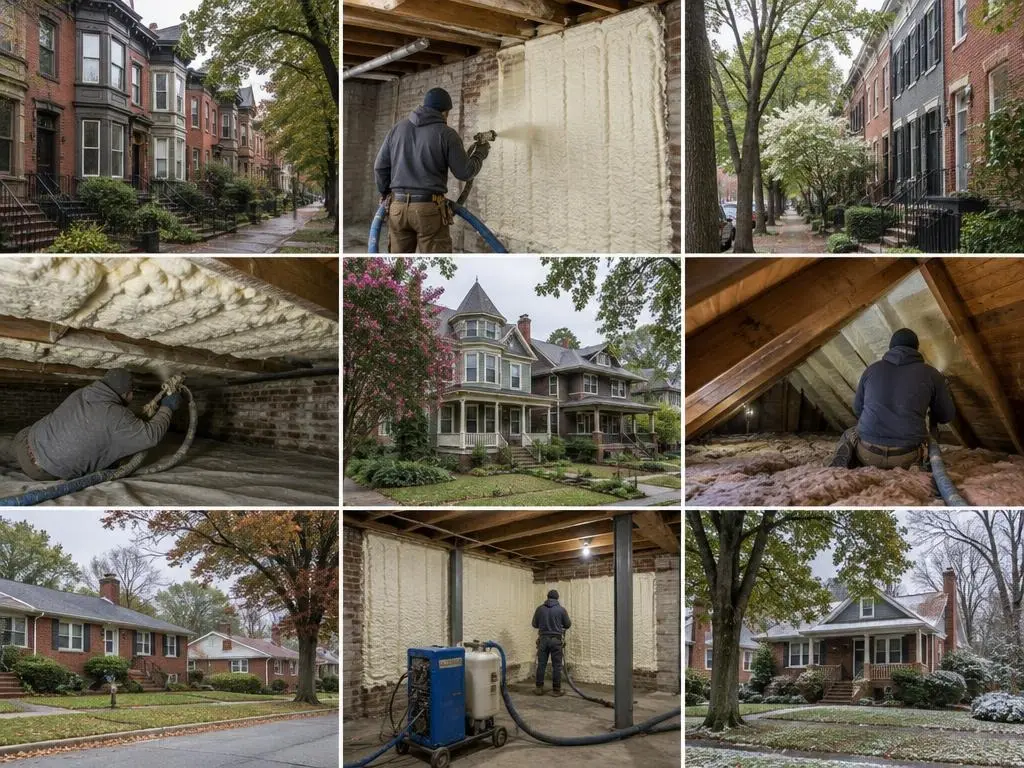
- Housing. Rowhouses are prominent in areas developed after the Civil War and typically follow Federal and late Victorian designs; Georgetown's Old Stone House (1765) is the oldest standing building.
Washington Questions
Do I need a permit for insulation in DC?
Interior insulation work may or may not need one depending on scope. Roof or exterior changes and historic districts add review. Check with DC's Department of Buildings for your project.
What is the most effective upgrade for a DC rowhouse?
Usually the roof cavity and top-floor ceiling, then the basement and rim joist.
Can spray foam help with humidity?
Sealing reduces humid outdoor air leaking in. Keep bath and kitchen exhaust working in a tighter house.
Do you work in every ward?
Yes, across the District.
Free Estimates in Washington, DC
Any neighborhood in the District: the estimate is free.
Spray Foam Insulation Near Washington
- Spray Foam Insulation in Capitol Hill, DC
- Spray Foam Insulation in Georgetown, DC
- Spray Foam Insulation in Petworth, DC
- Spray Foam Insulation in Silver Spring, MD
- Spray Foam Insulation in Takoma Park, MD
- Spray Foam Insulation in Bethesda, MD
- Spray Foam Insulation in Rockville, MD
- Spray Foam Insulation in Hyattsville, MD
- Spray Foam Insulation in College Park, MD
- Spray Foam Insulation in Bowie, MD
- Spray Foam Insulation in Arlington, VA
- Spray Foam Insulation in Alexandria, VA
- Spray Foam Insulation in Falls Church, VA
- Spray Foam Insulation in McLean, VA