
One of the largest historic districts in the country
Spray Foam Insulation in Capitol Hill, DC
Dense blocks of 19th-century rowhouses, each with its own quirks.
- Free on-site estimates
- Written quote listing material, thickness and R-value for every area
- Moisture and ventilation checked before anything is sealed up
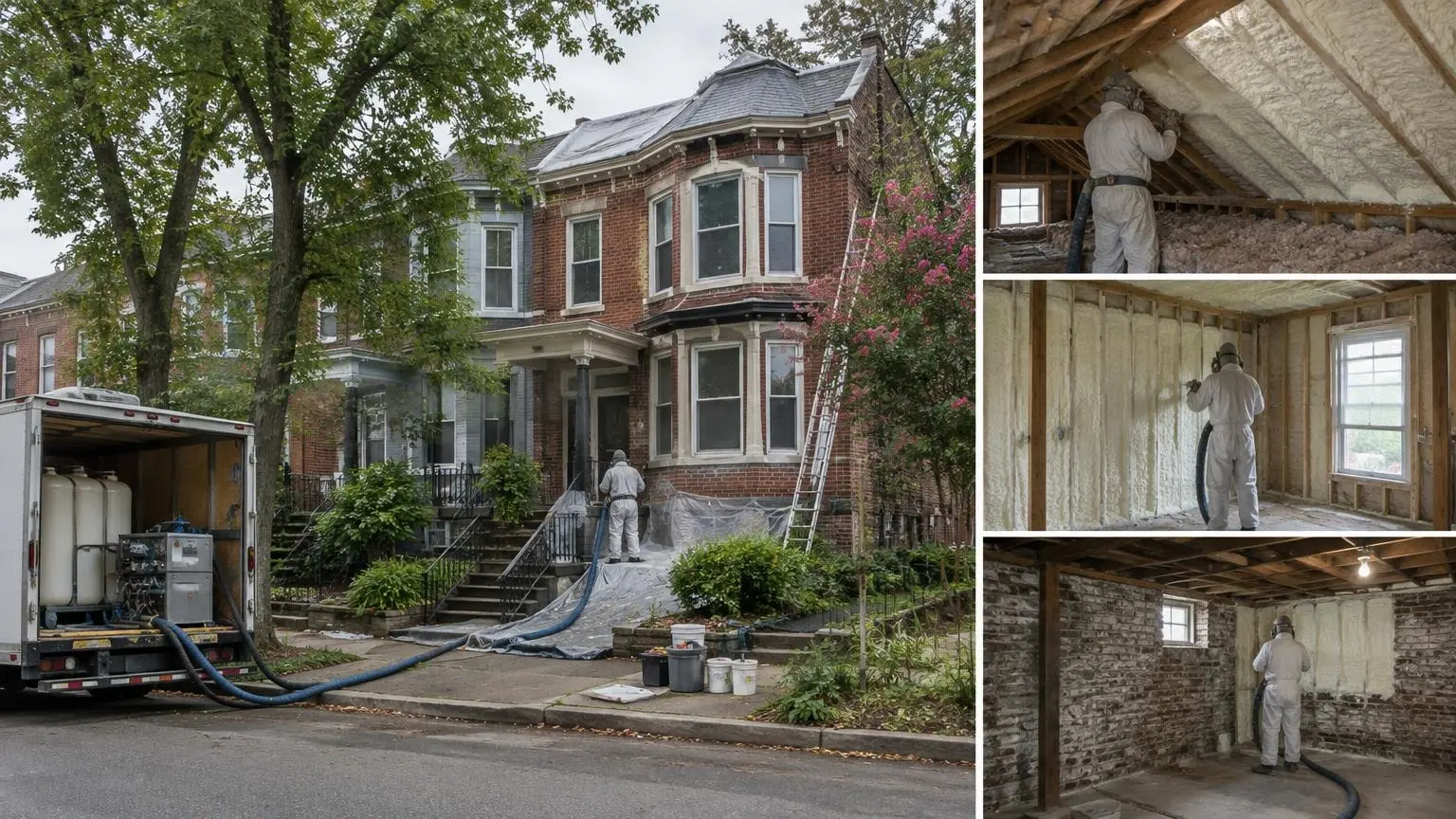
Rowhouses in a Historic District
Spray foam insulation on Capitol Hill means working in some of the oldest housing in the city. The neighborhood is dominated by rowhouses, largely 19th century, in a mix of Federal townhouses, small frame dwellings, Italianate houses and late-1800s pressed-brick rows. About 35,000 people live in just under two square miles, making it one of the densest parts of Washington. The Capitol Hill Historic District was listed on the National Register in 1976 and is one of the largest in the country.
Built in a boom
The area saw a building boom between 1890 and 1910, when it became one of the first neighborhoods with electricity, piped water and plumbing. Houses from that era have tall ceilings, brick party walls, low-slope roofs and basements with brick foundations.
What they usually need
The roof cavity above the top floor is the biggest target: often shallow, sometimes nearly empty. Closed-cell foam or loose fill, depending on depth. Next is the basement, where the rim joist and the brick foundation leak air and moisture. Rear additions and kitchen bump-outs, often built later on crawl spaces or slabs, are frequently the coldest rooms in the house.
Historic review
The historic district governs exterior changes. Interior insulation is usually not an exterior change, but roof work or anything visible from the street should be checked before it is planned.
Access through the roof hatch
Many rowhouse roof cavities can only be reached through a roof hatch or a small ceiling opening. We plan the work around that access and protect the rooms below.
Sound between houses
Open-cell foam in interior walls and floors can cut noise. Shared party walls have fire-rating rules to respect. Get a free estimate
What to Know in Capitol Hill
- Rowhouses. Capitol Hill has a high concentration of rowhouses, largely 19th century, and about 35,000 residents in just under 2 square miles.
- Historic district. The Capitol Hill Historic District was placed on the National Register of Historic Places in 1976 and is one of the largest in the United States.
- Building boom. A real estate boom between 1890 and 1910 followed the arrival of electricity, piped water and plumbing in the 1890s.
- Energy code. DC's residential energy code is based on the 2017 IECC for Climate Zone 4A, with R-49 ceilings for new work.
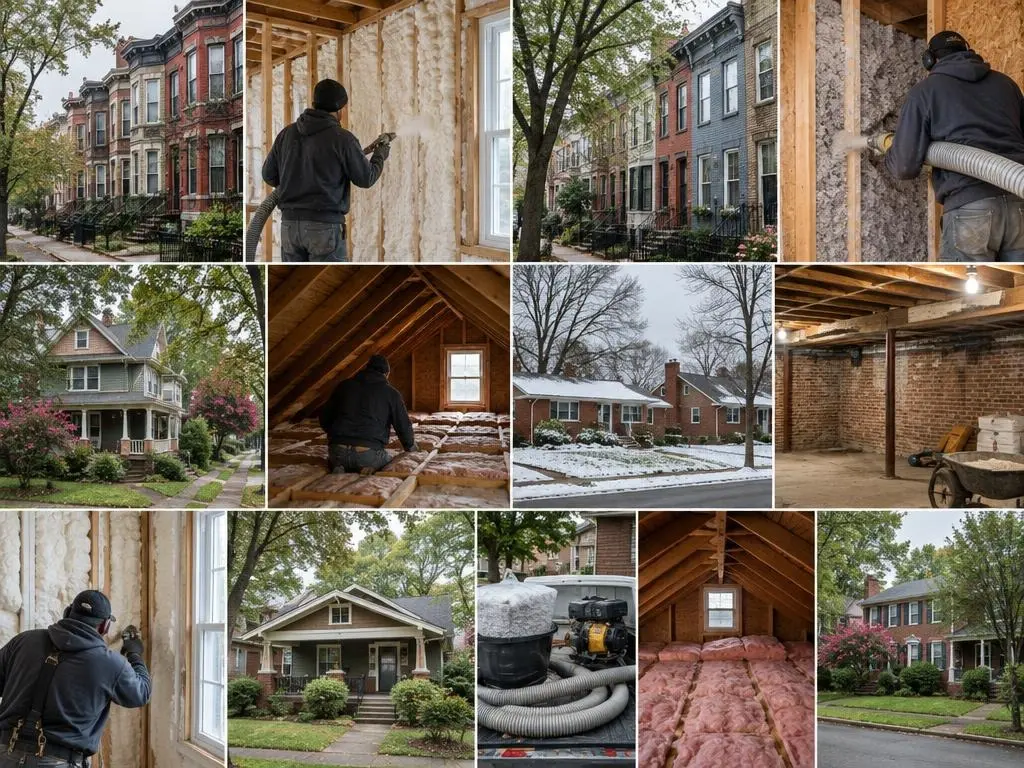
Capitol Hill Questions
Can you insulate a shallow rowhouse roof?
Often, yes. Where depth allows, loose fill; where it is tight, closed-cell foam. We look first.
Do I need historic approval for insulation?
Interior work usually does not change the exterior. Roof changes or anything visible should be checked first.
Why is my rear addition so cold?
Additions are often on crawl spaces or slabs with little insulation. Foam under the floor and in the ceiling usually helps.
Do you work on Capitol Hill east of Lincoln Park?
Yes, across the neighborhood.
Free Estimates in Capitol Hill, DC
Capitol Hill rowhouses: free estimates, written quotes.
Spray Foam Insulation Near Capitol Hill
- Spray Foam Insulation in Washington, DC
- Spray Foam Insulation in Georgetown, DC
- Spray Foam Insulation in Petworth, DC
- Spray Foam Insulation in Silver Spring, MD
- Spray Foam Insulation in Takoma Park, MD
- Spray Foam Insulation in Bethesda, MD
- Spray Foam Insulation in Rockville, MD
- Spray Foam Insulation in Hyattsville, MD
- Spray Foam Insulation in College Park, MD
- Spray Foam Insulation in Bowie, MD
- Spray Foam Insulation in Arlington, VA
- Spray Foam Insulation in Alexandria, VA
- Spray Foam Insulation in Falls Church, VA
- Spray Foam Insulation in McLean, VA